Have you ever wondered whether to write wean or ween? These two words look and sound similar, but they have different levels of acceptance in standard English. If you are writing an email, school assignment, article, or everyday message, knowing which spelling to use can help you avoid mistakes.
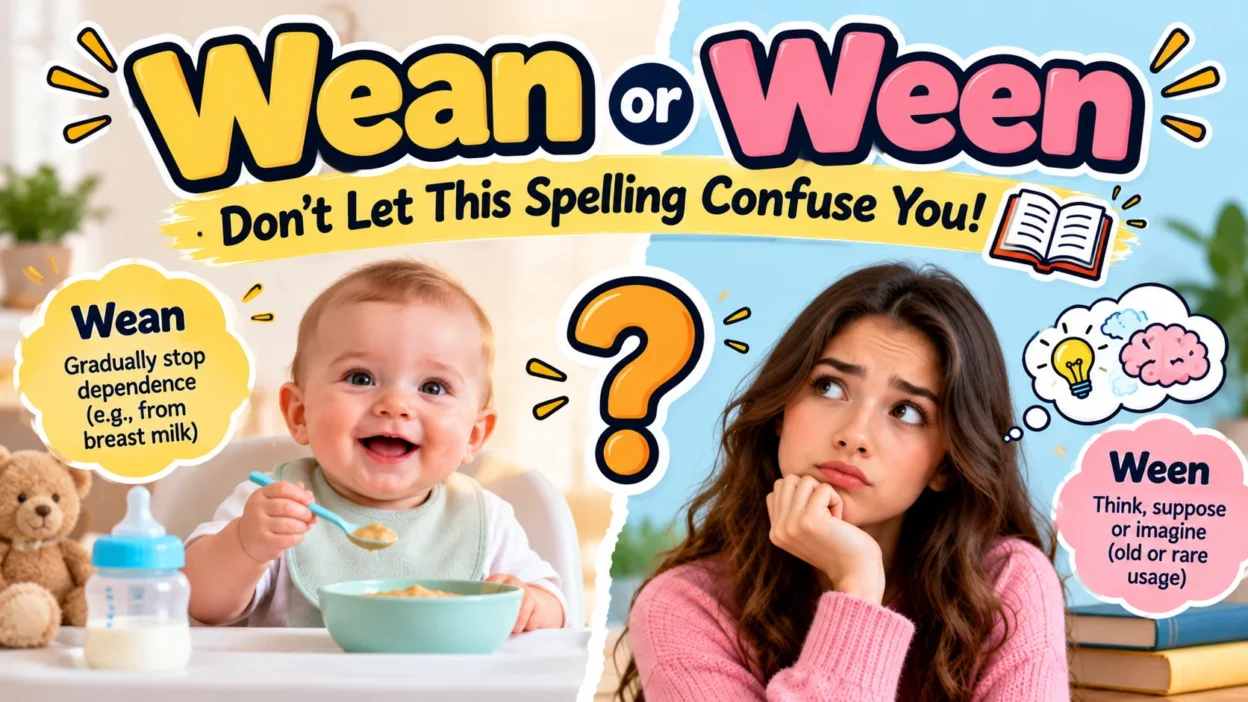
Wean is the correct standard spelling when you mean to gradually stop depending on something or to transition a baby or young animal away from its mother’s milk. Ween is a real but uncommon word that usually appears in the expression to wit or to ween in older or historical English, though it is rare in modern usage.
In this guide, you will learn the difference between wean and ween, their meanings, example sentences, pronunciation, common mistakes, and how to remember the correct spelling.
📖 Wean or Ween: Which Word Is Correct?
Wean is the word you should use in almost all modern everyday situations involving the gradual ending of dependence on something.
For example, parents may wean a baby from breastfeeding, while a doctor may help a patient wean off a medication when medically appropriate. A person can also wean themselves off social media or gradually reduce their dependence on caffeine.
Ween is not a standard alternative spelling of wean. It is an old English verb meaning to think, suppose, or imagine, and it survives mainly in historical or literary contexts.
| Word | Meaning | Modern usage |
|---|---|---|
| Wean | Gradually stop dependence on something | Common |
| Ween | Think, suppose, or imagine in older English | Rare or archaic |
Quick answer: If you mean gradually stopping breastfeeding or reducing dependence on something, use wean.
🌱 What Does Wean Mean?
The verb wean means to gradually stop a person or animal from relying on something, especially a mother’s milk. It can also describe reducing dependence on a habit, substance, or activity.
For example, when a baby begins eating solid food instead of relying entirely on breast milk, the process is called weaning. Similarly, someone who reduces their caffeine intake over time may say they are weaning themselves off coffee.
The word often suggests a gradual transition rather than an immediate or sudden change.
Examples include:
- The parents plan to wean their baby gradually.
- The farmer began to wean the calves from their mothers.
- She wants to wean herself off sugary drinks.
- He is trying to wean himself from constant phone use.
- The doctor explained how to reduce the medication safely.
In each sentence, wean describes moving away from a source of nourishment, support, or dependence.
🍼 What Does Wean Mean for Babies?
When people discuss babies, wean usually refers to transitioning away from breastfeeding or bottle-feeding, depending on the context.
The process can involve introducing complementary foods and gradually changing feeding routines. The exact approach depends on the baby’s age, nutritional needs, and family circumstances.
For example:
The parents decided to wean their baby gradually.
This means they plan to transition the baby away from breastfeeding or another form of milk feeding.
The word also appears in expressions such as:
- Wean a baby
- Wean from breastfeeding
- Begin weaning
- Weaning process
- Weaning foods
In medical or parenting discussions, the word describes a feeding transition, not necessarily the complete end of milk consumption at once.
💊 What Does Wean Off Mean?
Wean off means to gradually reduce or end dependence on something.
The phrase often appears in conversations about habits, caffeine, nicotine, medication, or other substances. However, the safest method depends on what a person is reducing.
Examples:
- She is trying to wean off coffee.
- He wants to wean himself off late-night scrolling.
- The patient was gradually weaned off a medication under medical supervision.
- They are trying to wean the child off sugary drinks.
When the subject is a prescribed medication, do not stop or reduce it without appropriate medical guidance. Some medications require a carefully supervised taper.
📚 What Does Ween Mean?
Ween is an uncommon, largely archaic English verb that means to think, suppose, or imagine.
You are unlikely to encounter it in ordinary modern conversations, school essays, or professional writing. It may appear in historical texts, older literature, or discussions of the development of the English language.
For example, older English writing may use ween in a sense similar to think or suppose.
Today, writers generally choose more familiar alternatives, such as:
- Think
- Suppose
- Believe
- Imagine
- Assume
If you are writing about breastfeeding, habits, or gradual dependence, ween is not the correct choice.
⚖️ Wean vs. Ween: Key Differences
The most important distinction between these words is their meaning and frequency of use.
| Feature | Wean | Ween |
|---|---|---|
| Standard modern word | Yes | No, not in ordinary use |
| Main meaning | Gradually end dependence | Think or suppose |
| Common context | Parenting, health, habits | Historical or literary English |
| Example | Wean a baby from breastfeeding | An old text may use ween to mean suppose |
| Best choice for everyday writing | Yes, when referring to gradual transition | Rarely appropriate |
The words are not interchangeable, even though their spelling and pronunciation are similar.
🗣️ Wean vs. Ween Pronunciation
In common modern English pronunciation, wean and ween are generally pronounced the same way or very similarly.
Both use the long ee vowel sound, as in green or seen. Their difference is mainly in spelling, meaning, and usage rather than pronunciation.
| Word | Pronunciation guide | Rhymes with |
|---|---|---|
| Wean | WEEN | Green |
| Ween | WEEN | Seen |
Because the words sound alike, spell-checking and context can help you choose the correct one.
✍️ Wean or Ween: Example Sentences
The easiest way to remember the difference is to see the words in context.
Correct Uses of Wean
- The mother began to wean her baby from breastfeeding.
- I am trying to wean myself off soda.
- The farmer will wean the young animals when they are ready.
- She wants to wean herself from checking her phone constantly.
- The doctor explained how to wean the patient off the medication safely.
- Parents often discuss when to begin weaning their babies.
- He gradually weaned himself off his daily energy drinks.
- The organization is trying to wean the community from reliance on emergency aid.
Historical Use of Ween
- In an older literary text, ween may mean to suppose something to be true.
- A historical writer might use ween where a modern writer would use think or believe.
For contemporary writing, use wean whenever you mean to gradually stop dependence on something.
🚫 Common Mistakes When Using Wean and Ween
People often confuse these words because they sound alike. These simple guidelines can help you avoid spelling errors.
Mistake 1: Writing ween a baby
Incorrect for modern standard English: Ween a baby from breastfeeding.
Correct: Wean a baby from breastfeeding.
Mistake 2: Writing ween off coffee
Incorrect: I want to ween off coffee.
Correct: I want to wean myself off coffee.
Mistake 3: Treating ween as a modern synonym for wean
The words have different historical meanings. Ween is not the normal spelling for gradual withdrawal or transition.
Mistake 4: Assuming similar pronunciation means identical meaning
English contains many words that sound alike but have different meanings and spellings. Context is essential when choosing between them.
🧠 Easy Trick to Remember Wean or Ween
Here is a simple way to remember the correct spelling.
Think of wean as the word for making a gradual change. It commonly appears in phrases such as wean a baby, wean off caffeine, and weaning process.
You can also remember the expression wean away: both words begin with w, and wean refers to gradually moving away from a source of dependence.
If you are writing about a baby, medication, caffeine, habits, or dependence, choose wean.
❓ Frequently Asked Questions
Is wean or ween correct?
Wean is correct when referring to gradually ending dependence on something, such as breastfeeding or caffeine. Ween is an archaic English word meaning to think or suppose.
Is ween a real word?
Yes. Ween is a real but uncommon, largely archaic word. It is not the standard alternative spelling of wean.
What does wean mean in simple words?
Wean means to gradually stop relying on something, especially a mother’s milk, or to reduce dependence on a habit or substance.
What does wean off mean?
Wean off means to gradually reduce or end dependence on something. For medication, follow medical advice before changing a dose.
How do you spell wean a baby?
The correct spelling is wean. For example, The parents plan to wean their baby gradually.
Are wean and ween pronounced the same?
They are generally pronounced the same way in modern English, with a long ee sound. Their meanings and typical usage differ.
What is the past tense of wean?
The past tense is weaned. For example, The parents weaned their baby gradually.
What is the noun form of wean?
The common noun form is weaning, which describes the process of gradually transitioning away from milk feeding or reducing dependence on something.
What are synonyms for wean?
Depending on context, alternatives include transition, reduce dependence, discontinue gradually, detach, or wean off. No single synonym fits every situation.
🌟 Final Thoughts on Wean or Ween
The difference between wean and ween is straightforward once you understand their meanings. Wean is the standard modern word for gradually ending dependence on something, especially a baby transitioning away from breastfeeding. Ween is a rare, archaic verb that means to think or suppose.
If you are writing a school assignment, blog post, email, or everyday message, choose wean when describing a gradual transition away from milk, a substance, or a habit.
Remember: Wean = gradually stop depending on something. That is the spelling you will need in almost every modern situation.

Vivian Mercer is an English language writer and vocabulary enthusiast who specializes in synonyms, word meanings, grammar, idioms, and language usage. She creates accurate, easy-to-understand content that helps readers improve their English skills with confidence.