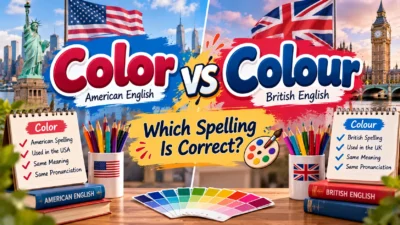

Have you ever typed benefited and wondered whether it should actually be benefitted? You are not alone. Both spellings appear in dictionaries, books, websites, and everyday writing, which can make this small spelling difference surprisingly confusing. The good news is that the choice is largely connected to American and British English spelling conventions. In American English, benefited is the standard spelling, while benefitted is commonly used in British English and some other varieties. Understanding this regional difference can help you write with confidence and avoid unnecessary spelling corrections.
🔎 Benefited or Benefitted: Which One Is Correct?
The short answer is that both benefited and benefitted can be correct, depending on the variety of English being used. The main difference is regional spelling preference rather than meaning or pronunciation.
| Spelling | Common usage | Example |
|---|---|---|
| benefited | American English | She benefited from the course. |
| benefitted | British English | She benefitted from the course. |
| benefiting | American English | He is benefiting from the program. |
| benefitting | British English | He is benefitting from the program. |
If you are writing for a US audience, choose benefited. If your audience primarily uses British English, benefitted is a common choice.
Neither spelling changes the meaning of the sentence.
🇺🇸 When Should You Use “Benefited”?
Benefited is the preferred spelling in American English. It is the past tense and past participle form of the verb benefit, and it appears frequently in American academic, professional, business, and everyday writing.
The spelling follows the American convention of generally avoiding the doubling of the final consonant in verbs such as benefit when adding -ed or -ing.
Here are some natural examples:
- The students benefited from the additional lessons.
- She benefited greatly from the experience.
- The company benefited from the new strategy.
- We all benefited from the change.
- He benefited from regular practice.
- The community benefited from the new facility.
- They benefited from the updated training.
- The patient benefited from the treatment.
- Our team benefited from better communication.
- The business benefited from increased customer interest.
For content written specifically for American readers, benefited is generally the spelling you should use.
🇬🇧 When Should You Use “Benefitted”?
Benefitted is a common spelling in British English. The extra t reflects a British spelling convention used with certain verbs when forming the past tense or participle.
For example:
- She benefitted from the new opportunity.
- The students benefitted from additional support.
- The organization benefitted from the partnership.
- He benefitted from years of experience.
- The local economy benefitted from tourism.
- The company benefitted from the investment.
- We benefitted from their advice.
- The project benefitted from careful planning.
If your website, school, workplace, or publication follows British English, benefitted may fit the preferred style.
However, this does not mean that benefited is automatically incorrect in British writing. English spelling varies across dictionaries, publishers, and style guides, so usage can differ.
📚 What Does “Benefit” Mean?
Before deciding between benefited and benefitted, it helps to understand the base word benefit.
As a verb, benefit means to receive an advantage, improvement, or positive result from something.
For example:
Regular exercise can benefit your health.
As a noun, benefit can mean an advantage or helpful result.
One benefit of studying early is having less stress before an exam.
The past form describes something that already provided or received that advantage.
She benefited from the extra practice.
The spelling changes depending on the English variety, but the basic meaning remains the same.
✍️ Benefited vs Benefitted: Why Is There an Extra “T”?
The confusion comes from the way English handles final consonants when suffixes such as -ed and -ing are added.
With many short verbs, English doubles the final consonant:
- stop → stopped
- plan → planned
- admit → admitted
- prefer → preferred
But benefit behaves differently in common American usage:
- benefit → benefited
- benefit → benefiting
British English commonly uses:
- benefit → benefitted
- benefit → benefitting
The important point is that you should not assume every English verb follows exactly the same spelling pattern. Regional conventions and word stress influence how these forms are written.
🧠 Benefited or Benefitted: An Easy Memory Trick
If you are writing for Americans, remember:
US English = one “t” → benefited
If you are writing for British readers, remember:
British English = two “t”s → benefitted
A simple way to remember the American spelling is:
Benefit + ed = benefited
Think of the US spelling as keeping the base word’s final t without adding another one.
For British spelling:
Benefit + ted = benefitted
The extra t is the feature that makes the British form visually different.
Quick memory chart
| Audience | Remember |
|---|---|
| 🇺🇸 US readers | benefited |
| 🇬🇧 UK readers | benefitted |
| US present participle | benefiting |
| UK present participle | benefitting |
📝 Benefited or Benefitted in Example Sentences
Seeing the two spellings in context makes the difference much easier to understand. The meaning of each sentence remains essentially the same; the spelling reflects the variety of English being used.
American English examples
- I benefited from the advice.
- She benefited from the experience.
- The students benefited from smaller classes.
- We benefited from the new technology.
- The company benefited from the agreement.
- He benefited from regular exercise.
- The town benefited from the new development.
- They benefited from professional guidance.
British English examples
- I benefitted from the advice.
- She benefitted from the experience.
- The students benefitted from smaller classes.
- We benefitted from the new technology.
- The company benefitted from the agreement.
- He benefitted from regular exercise.
- The town benefitted from the new development.
- They benefitted from professional guidance.
Notice that the sentence structure and meaning stay the same. Only the spelling changes.
⚖️ What Is the Difference Between Benefited and Benefitted?
There is no major difference in meaning between the two forms. Both are past-tense or past-participle forms of benefit.
The main distinction is spelling preference.
| Feature | Benefited | Benefitted |
|---|---|---|
| Meaning | Received an advantage | Received an advantage |
| Base verb | Benefit | Benefit |
| Past tense | Yes | Yes |
| Past participle | Yes | Yes |
| American English | Preferred | Less common |
| British English | Used | Common |
| Pronunciation | Same | Same |
| Meaning changes? | No | No |
So, if you see benefitted in a British publication, it does not mean the writer has used a completely different word. Likewise, benefited is not a different verb.
🌎 American vs British English: Which Spelling Should You Choose?
Your intended audience should usually guide your choice.
If your content is written for American readers, use benefited. This is especially important for websites, blogs, school assignments, business documents, and professional content targeting the United States.
If your content is written for British readers, benefitted is a common choice.
The most important thing is consistency. Avoid switching between the two forms without a reason.
For example, an article aimed at a US audience should generally use:
The students benefited from the program.
rather than switching later to:
The students benefitted from the program.
Consistency makes your writing look more polished and intentional.
🚫 Common Mistakes With Benefited and Benefitted
Because both spellings exist, writers sometimes assume one must always be wrong. That is the biggest misconception.
Mistake 1: Calling “benefitted” universally wrong
Incorrect idea: “Benefitted is always a spelling mistake.”
British English commonly uses benefitted, so it should not automatically be marked wrong.
Mistake 2: Assuming “benefited” is only a typo
Incorrect idea: “Benefited must be missing a second t.”
In American English, benefited is the standard form.
Mistake 3: Mixing regional styles
Using benefited in one paragraph and benefitted in another can create inconsistent spelling.
Choose the variety of English that fits your audience and stick with it.
Mistake 4: Applying one spelling rule to every verb
English contains many spelling patterns and exceptions. Do not assume that because one verb doubles its final consonant, every similar-looking verb must do the same.
🔤 Benefited, Benefitting, Beneficial, and Benefit
These related words can also cause confusion. Understanding their forms makes the entire word family easier to remember.
| Word | Part of speech | Example |
|---|---|---|
| benefit | Verb/noun | Exercise can benefit you. |
| benefited | Past form | She benefited from training. |
| benefitted | Past form | She benefitted from training. |
| benefiting | Present participle | He is benefiting from therapy. |
| benefitting | Present participle | He is benefitting from therapy. |
| beneficial | Adjective | The change was beneficial. |
| beneficiary | Noun | She was the beneficiary of the policy. |
The words are related, but they do not all follow exactly the same spelling pattern.
💡 Benefited or Benefitted in Formal Writing
Both forms can appear in formal writing, but your chosen English variety matters.
For US academic or professional writing, use benefited:
The researchers found that participants benefited from the additional instruction.
For British English writing, you may see:
The researchers found that participants benefitted from the additional instruction.
If you are writing an essay, report, article, or website for a specific institution, check its preferred style guide. Some organizations have house styles that determine which regional spelling should be followed.
🎯 Which Spelling Is Best for a US Audience?
For a US audience, benefited is the safest and most natural choice.
This applies to:
- American blog posts
- US-focused websites
- School assignments using American English
- Business documents
- Marketing content
- Social media copy
- News-style writing
- SEO articles targeting US readers
- Professional emails
- American academic writing
For example:
Thousands of customers benefited from the new service.
This is the form most appropriate for standard American English.
If your target audience is in the United Kingdom, however, benefitted may be preferred.
🧪 Test Yourself: Benefited or Benefitted?
Choose the spelling that best fits standard American English.
1. She ______ from the additional training.
2. The company ______ from the partnership.
3. We all ______ from the experience.
4. The students ______ from the new program.
5. He ______ greatly from regular practice.
Answers
- benefited
- benefited
- benefited
- benefited
- benefited
For standard American English, use benefited in all five examples.
If these sentences were being written according to a British English style, benefitted could be used instead.
📌 Quick Cheat Sheet for Benefited or Benefitted
When you need the answer quickly, use this guide:
- Benefit = base verb
- Benefited = common American English past form
- Benefitted = common British English past form
- Benefiting = common American English -ing form
- Benefitting = common British English -ing form
- Both past forms have the same basic meaning.
- The pronunciation is essentially the same.
- US-focused content should generally use benefited.
- UK-focused content commonly uses benefitted.
- Do not treat benefitted as universally incorrect.
- Keep your spelling consistent throughout a document.
❓ Frequently Asked Questions About Benefited or Benefitted
Is “benefited” correct?
Yes. Benefited is the standard spelling in American English and is also used in other varieties of English.
Is “benefitted” correct?
Yes. Benefitted is a recognized spelling and is commonly used in British English.
Which is American: benefited or benefitted?
Benefited is the standard American English spelling.
Which is British: benefited or benefitted?
Benefitted is commonly used in British English, although benefited also occurs.
Do benefited and benefitted mean the same thing?
Yes. They are alternative spellings of the past form of benefit, with regional preferences determining which spelling is more common.
Is “benefitted” a spelling mistake?
Not necessarily. It is a legitimate spelling, particularly in British English.
How do you pronounce benefited?
Benefited is pronounced essentially the same way as benefitted. The spelling difference does not create a meaningful difference in pronunciation.
Should I use benefited in an American blog?
Yes. If your blog targets a US audience, benefited is generally the preferred spelling.
What is the difference between benefited and benefiting?
Benefited is the past form, while benefiting is the present participle or gerund in standard American English.
For example:
She benefited from the course.
She is benefiting from the course.
Is “benefitting” correct?
Yes. Benefitting is commonly used in British English, while benefiting is standard in American English.
🏁 Final Thoughts on Benefited or Benefitted
The difference between benefited and benefitted is much simpler once you connect the spellings with regional English.
Benefited is the standard choice for American English, making it the better fit when writing for a US audience. Benefitted is commonly used in British English and is not simply a spelling error. Both forms describe the same idea: receiving an advantage, improvement, or positive result.
The easiest rule to remember is:
🇺🇸 American English → benefited
🇬🇧 British English → benefitted
If you are writing online for American readers, especially for a US-focused website, use benefited consistently. Once you know the regional spelling difference, this commonly confusing word becomes much easier to handle.

Vivian Mercer is an English language writer and vocabulary enthusiast who specializes in synonyms, word meanings, grammar, idioms, and language usage. She creates accurate, easy-to-understand content that helps readers improve their English skills with confidence.